Mason Bee Houses

Is there anything more lovely than the sight of bees, as they buzz around the flowers in our gardens? Red mason bees are an endangered native solitary bee found in England and Wales. They are wonderful pollinators and thought to be around 120 times more efficient than the honeybee. By creating bee-friendly spaces in our gardens, we can help these bees to flourish.
Read More
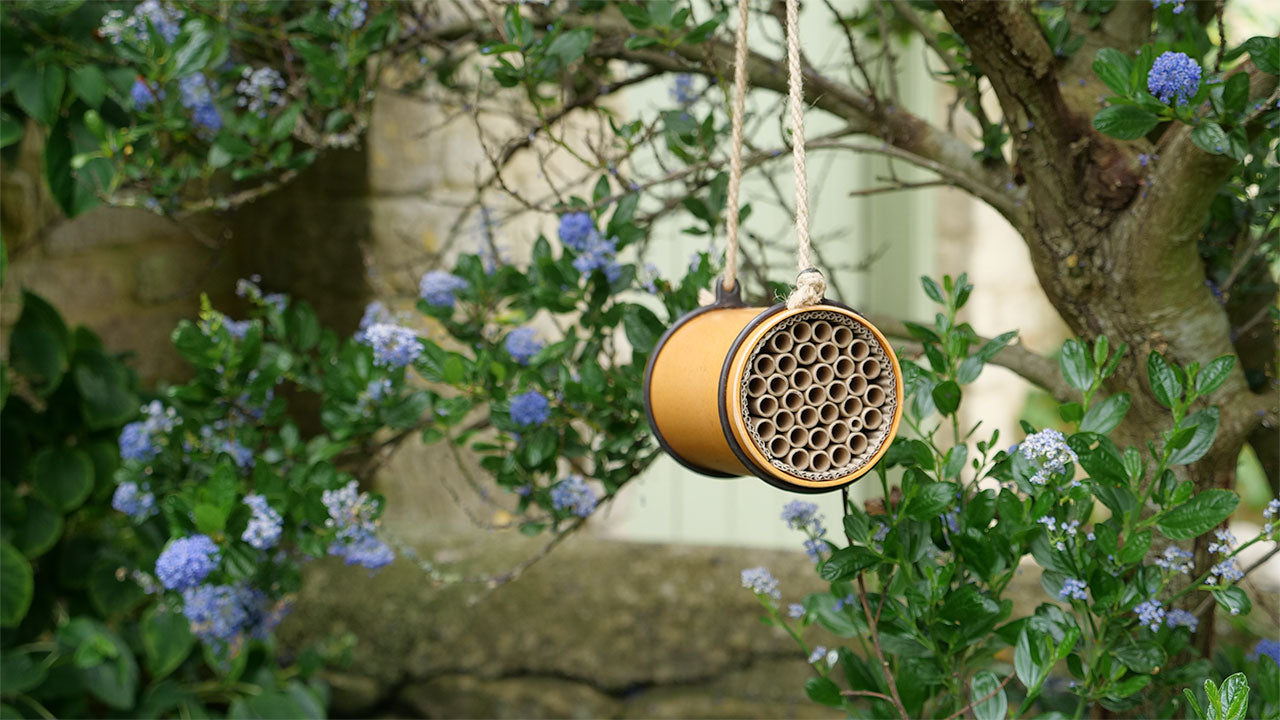
Hanging bee tube in a tree with purple flowers

Showing 1-3 of 3 products

Sort by:
Sort

Sort

Showing 3 of 3 products

  • Mason Bee Tubes

    Mason Bee Tubes

    Regular price
    From £8.95
    Sale price
    From £8.95
    Regular price
    • Natural: clean-drilled wooden mason bee tubes
    • Popular: mason and leafcutter bees love them
    • Caring: provides a habitat for vital pollinators
  • Mason Bee Nest Box with Nesting Tubes

    Mason Bee Nest Box with Nesting Tubes

    Regular price
    £29.95
    Sale price
    £29.95
    Regular price
    • Protective: a perfect home for pollinating mason bees and other solitary bees
    • Attractive: a delightful design with nesting tubes for mason bees
    • Easy assembly: supplied fully assembled with approx. 94 bee nesting tubes
  • Mason Bee Eco Nest Box

    Mason Bee Eco Nest Box

    Regular price
    £19.95
    Sale price
    £19.95
    Regular price
    • Exceptional: one of the most beneficial bee nesting products on the market
    • Re-usable: plastic-free weatherproof plant fibre casing can be used year after year
    • Safe and secure: a predator baffle prevents birds from eating bee larvae

Showing 1-3 of 3 products

Mason bees are gentle (they do not sting) and are solitary bees, who do not nest in a hive but in hollow spaces.

Specially-made for bees

Bee houses have multiple chambers for the bees to house their larvae. In the wild they nest in existing holes and cavities and prefer those in sunny south-facing locations. Contribute to the wellbeing of these native bees by offering them a ready-made house in which to nest.

Mason bee houses with Ark Wildlife

At Ark Wildlife, we want to help you welcome these gentle visitors to your garden. The Mason bee houses on offer are easy to use, and can create a safe place for bees to set up camp when natural nesting spaces are hard to find.

The perfect space for bees

You do not need a big space to have a mason bee house. In order to thrive, bees need a diet of nectar and pollen. Sow some wildflower seeds in your garden, along with other bee-friendly plants and provide them with a safe place to drink water alongside their home.

FAQs

Find answers to our most frequently asked questions.

If you cannot find the answer to your query within these FAQ’s please call our customer service team on free phone 0800 085 4865 between 9.00am – 5.00pm Monday to Friday and we’ll be happy to answer your questions.

Read all FAQs

Outside of office hours please complete the form on our Contact Us page and we will respond to your request within 1 working day of our return.

How deep should the nesting tubes be?

Nesting tubes should generally be at least 130-160mm deep to provide enough space for solitary bees to build a series of individual brood chambers. Different bee species have different nesting requirements, so deeper tubes can provide opportunities for a wider range of solitary bees. Very shallow tubes offer less nesting space and may be less suitable for species that need longer cavities. When choosing a bee house, check the depth and diameter of the nesting tubes as well as the overall design.

What makes one mason bee house better than another?

A good mason bee house should provide suitable nesting spaces while also allowing you to maintain and replace them when necessary. Look for removable nesting tubes or trays that can be taken out and replaced, as this makes it easier to manage old nesting material and reduce the build-up of parasites and fungal growth. A solid back and a roof that protects the entrance from rain are also useful features. Check that the nesting tubes are the appropriate size for solitary bees.

Where should a mason bee house go?

Place a mason bee house somewhere sunny and sheltered, ideally facing south or south-east, and fix it securely to a wall, fence or post. Positioning the nesting tubes so they face slightly downwards can help prevent rain from entering the tubes. Around head height is a practical position for observation and maintenance, although the exact height is less important than keeping the house stable and dry. Having flowering plants nearby provides the nectar and pollen that mason bees need.

What do the capped tube ends mean?

Capped tube ends are a good sign that solitary bees have been using your bee house for nesting. Mason bees typically seal the entrance with mud, while leafcutter bees may use pieces of leaves to close their nesting tubes. You may see several sealed tubes even if you rarely see the bees themselves, as much of their nesting activity takes place inside the tubes.

Do I need to do anything over winter?

Mason bee cocoons can overwinter inside their nesting tubes, but keeping the house dry and protected from prolonged wet weather is important. Some bee houses can remain outside in a sheltered position, while removable nesting tubes or trays may be taken somewhere cool, dry and unheated over winter. Avoid placing them somewhere warm, as the bees need natural seasonal temperatures. Follow the manufacturer's instructions and return any stored nesting tubes outside in early spring, before mason bees become active.

FREE Express Delivery Over £40

To most UK postcodes

60-Day Money Back Guarantee

Buy with confidence

Over 500,000 Satisfied Customers

Quality at the heart of everything we do

Rated 4.9/5 for Customer Service

Verified independent reviews