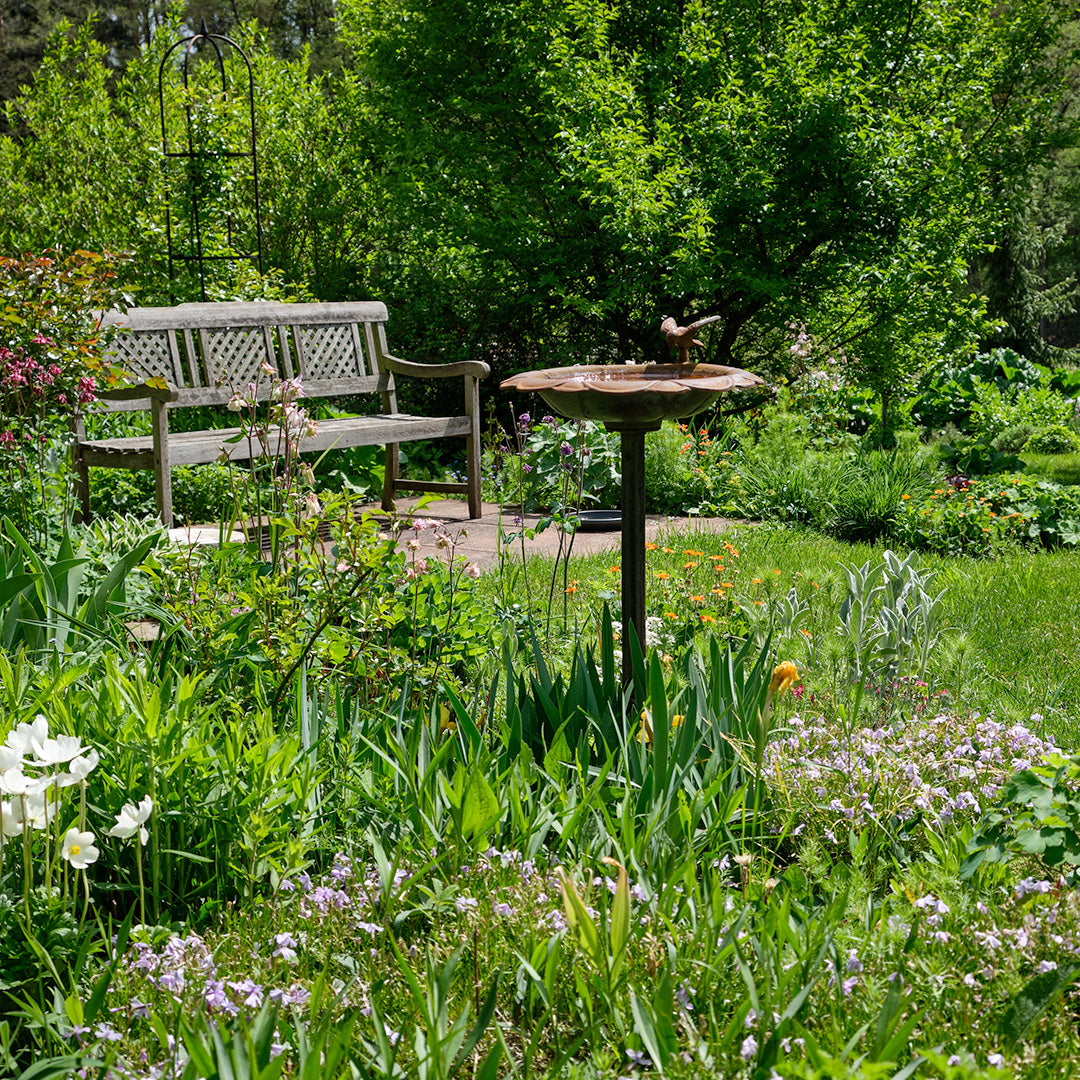
A bird bath can become the heart of a wildlife-friendly garden, especially during warm weather when birds desperately need fresh water for drinking and bathing. But without regular cleaning, it can quickly turn from a safe haven into a breeding ground for algae, bacteria, and disease. Here’s how to clean every type of bird bath properly, safely, and in a way that keeps your garden birds healthy all year round.
How to Clean a Bird Bath
Cleaning a bird bath is simpler than many people realise, but consistency matters far more than perfection. Empty the water completely, scrub away algae, droppings, and slimy organic build-up using a stiff brush, then rinse thoroughly before refilling with fresh water. During warm weather, daily water changes can make an enormous difference to bird health.
Importantly, it’s not the water itself that causes problems, it’s the organic material building up within it. Droppings, saliva, wet leaves, pollen, spilled bird food, and algae create the perfect environment for bacteria and parasites to thrive. If the water no longer looks sparkling clear, that’s your sign it’s time to clean the bath.
Fresh chlorinated tap water is safer (for birds as well as us) than stagnant harvested rainwater because the low chlorine levels help suppress bacteria and parasite survival for a time after filling. Chlorine dissipates naturally quite quickly outdoors, especially in sunlight and moving air, meaning the water will lose its hygiene benefit relatively quickly. Frequent replacement matters far more than letting water sit for days.
Birds share water closely, often drinking moments after bathing. That means bird bath hygiene isn’t simply cosmetic, it’s one of the most important ways to help prevent diseases such as trichomonosis, salmonella, and other infections spreading between garden birds.
Cleaning Different Types of Bird Baths
How to Clean a Stone Bird Bath
Stone bird baths develop algae and lichen naturally because their rough surfaces trap moisture and organic matter. Use a hard-bristled brush with warm water to remove build-up thoroughly. Avoid pressure washers on softer stone, as they can damage the surface over time.
Stone baths age beautifully, but regular scrubbing is important because their porous texture gives bacteria and algae plenty of places to cling to between cleanings.
How to Clean a Resin Bird Bath
Resin bird baths are lightweight and easier to maintain because their smoother surfaces resist algae more effectively than stone or concrete. Warm water and a soft brush are usually enough for routine cleaning.
Avoid harsh abrasives that may scratch the finish. Small scratches can trap dirt and encourage faster algae growth later, especially in sunny garden spots.

How to Clean a Ceramic Bird Bath
Ceramic bird baths should be cleaned gently to avoid cracking glazed surfaces. Use warm water, a cloth or soft brush, and rinse thoroughly before refilling.
The smooth glaze makes ceramic baths one of the most hygienic options for birds because dirt and bacteria are less able to penetrate the surface. However, droppings and biofilm still accumulate surprisingly quickly during summer.
How to Clean a Concrete Bird Bath
Concrete bird baths are extremely durable but highly porous, meaning algae and bacteria can become deeply embedded if neglected. Regular cleaning prevents staining and slippery green build-up.
A stiff brush and hot water work well for routine maintenance. If algae becomes persistent, allowing the bath to dry completely in the UV of direct sunlight after cleaning can help reduce regrowth naturally.
How to Clean a Copper Bird Bath
Copper bird baths require gentle care to preserve their finish. Warm water and a soft cloth are usually sufficient. Avoid strong acidic cleaners, which may damage the protective patina developing on the metal.
Interestingly, copper naturally has mild antimicrobial properties, helping slow bacterial growth slightly compared to some other materials. Even so, regular water changes and cleaning remain essential.
Maintaining Bird Bath Hygiene
How to Keep Bird Bath Water Clean
The single best habit is changing the water daily. Fresh chlorinated tap water helps dilute bacteria, parasites, and organic debris before problems build up.
Positioning a bird bath in partial shade also helps. Full sun encourages algae blooms, while nearby trees may constantly drop leaves, seeds, and droppings into the water. Finding the right location dramatically aids hygienic maintenance.
How to Keep a Bird Bath Clean of Algae
Algae thrives in warmth, sunlight, and nutrient-rich water. Bird droppings, decaying leaves, and spilled bird food all feed algae growth surprisingly quickly.
Regular scrubbing prevents algae establishing a stubborn biofilm layer. During hot weather, even a quick rinse every day or two can stop green water developing before it becomes a larger problem.
If algae returns constantly, move the bird bath into slightly shadier conditions and avoid overfilling nearby feeders where seed debris can fall into the water.
How to Clean a Bird Bath Safely
Bird baths should always be cleaned using wildlife-safe methods. Hot water and physical scrubbing are usually enough for routine hygiene.
Avoid household cleaners containing perfumes, detergents, or strong chemicals unless specifically designed for wildlife equipment. Birds absorb contaminants very easily while drinking and bathing, and even tiny residues may damage feathers or irritate sensitive skin.
At Ark Wildlife, we always recommend rinsing thoroughly and allowing baths to air dry briefly before refilling.
How to Clean a Bird Bath with Baking Soda
Baking soda can help loosen stubborn grime and mild algae safely when used sparingly. Sprinkle a small amount onto a wet brush or cloth, scrub gently, then rinse extremely thoroughly afterwards.
While baking soda is generally safer than many household chemicals, excessive residue can still alter water chemistry. Thorough rinsing matters far more than the cleaner itself.
Can You Clean a Bird Bath with Vinegar?
White vinegar is often used to help dissolve algae and mineral staining because its mild acidity breaks down deposits naturally. A diluted solution followed by very thorough rinsing is generally considered safe.
However, vinegar alone does not reliably disinfect against all bird diseases and parasites. It’s best viewed as a descaler or algae remover rather than a hygiene solution.
Never refill a bird bath until all vinegar smell has disappeared completely.
Can You Clean a Bird Bath with Bleach?
Bleach can disinfect bird baths effectively, but it must be used with extreme caution. Even tiny residues can harm birds if not rinsed away completely.
If bleach is used, it should always be heavily diluted, followed by multiple thorough rinses and full drying before birds regain access. For most routine garden cleaning, hot water and specialist wildlife-safe disinfectants are safer and more practical choices.
Conclusion
A clean bird bath does far more than improve the appearance of your garden. It provides birds with safe drinking water, supports feather health, and reduces the spread of disease during busy feeding and breeding seasons. Small daily habits, fresh water, quick rinses, and regular scrubbing, help create a healthier space where wildlife can truly thrive.
FAQs About Cleaning Bird Baths
Why can bird bath water turn green so fast?
Warm temperatures, sunlight, bird droppings, pollen, and organic debris all feed algae growth. During summer, a full bird bath can turn green overnight if water isn’t changed regularly.
Why is pink slime in bird baths dangerous for wild birds?
Pink slime is usually caused by airborne bacteria and biofilm growth. It can harbour harmful microorganisms and spreads rapidly in damp conditions. Bird baths showing pink residue should be scrubbed thoroughly immediately and completely dried prior to refilling.
White vinegar vs hydrogen peroxide for bird bath algae?
White vinegar helps dissolve algae and mineral deposits, while hydrogen peroxide is often more effective at disinfecting surfaces. Both require careful dilution and extremely thorough rinsing before birds use the bath again.
How often should you change bird bath water to prevent avian flu and disease?
Ideally daily during warm weather or periods of heavy bird activity. Even bi-daily during heatwaves and the breeding season. Fresh tap water dramatically reduces the build-up of saliva, droppings, parasites, and bacteria linked to diseases such as trichomonosis and avian flu.
Can dirty bird baths spread disease between birds?
Yes. Shared water sources allow saliva, droppings, and parasites to pass easily between birds. Poorly maintained baths can spread trichomonosis, salmonella, e-coli, and other infections surprisingly quickly.
Should bird baths be emptied during disease outbreaks?
If sick birds are seen locally, temporarily removing bird baths and feeders for 1–2 weeks, or until all signs of illness have gone, can help disperse birds naturally and slow disease transmission.
Is rainwater safe for bird baths?
Rainwater itself is generally safe, but stagnant rainwater containing leaves, droppings, and organic debris can quickly become contaminated. Fresh, regularly replaced tap water is usually safest all year round.