A - Z Garden Bird Identification Index
(Bombycilla garrulus)
The Waxwing is one of the UK's most striking winter visitors, arriving from Scandinavia, northern Europe and western Russia when food supplies become scarce in its usual wintering grounds. Although Waxwings are not seen every winter in large numbers, when they do arrive, they can be spotted in some rather unexpected places, including town centres, supermarket car parks and gardens.
What does a Waxwing look like?
Length: 18cm.
The Waxwing is a plump, Starling-sized bird with beautiful pinky-brown plumage and a distinctive crest on top of its head. It has a black throat, a black mask around its eyes, and a greyish rump, with black wings marked with white and yellow. Its tail is black with a bright yellow tip, while some of its wing feathers have striking red, wax-like tips, which give the bird its name.
Both males and females have very similar colouring, making them difficult to tell apart. Younger birds tend to have duller plumage, a less prominent crest and less noticeable wing markings.
Waxwings are quite unmistakable once you know what to look for. Their colourful plumage, upright crest and distinctive wing markings make them one of the easiest winter visitors to recognise.

Waxwing call and song – What does a waxwing sound like?
Waxwings are fairly quiet birds, but their distinctive calls can often be heard when flocks are feeding or flying overhead. Listen out for a high-pitched, thin, trilling sound, often described as resembling the gentle tinkling of small bells.
They produce a variety of soft, rolling whistles and twittering calls, which are particularly noticeable when several birds gather together in berry-laden trees.
What is a waxwing winter?
A Waxwing winter, sometimes called a Waxwing irruption, is when unusually large numbers of Waxwings arrive in the UK during winter. This happens when berry crops in their usual wintering grounds, particularly in Scandinavia, are poor, forcing them to travel further west in search of food. Some winters bring only a handful of sightings, while others see large flocks appearing across the country.
Where and when do waxwings nest?
Waxwings do not normally breed in the UK. Instead, they return to their breeding grounds across Scandinavia, Finland and northern Russia during spring, where they nest in coniferous and mixed woodland.
Breeding generally takes place between May and July. Pairs build an open, cup-shaped nest on a tree branch, usually made from twigs, grasses, moss and lichen, with a softer lining of feathers and other materials.
The female typically lays four to six eggs, which she incubates for around 13–14 days. During this time, the male helps by bringing her food. Once the chicks hatch, both parents help feed them, and the young usually leave the nest after around 15–17 days.
Waxwing habitat
Waxwings favour woodland, particularly areas with plenty of berry-producing trees and shrubs. However, during winter they can be found in a surprising variety of habitats, including parks, gardens, orchards and urban green spaces.
They are particularly fond of areas where Rowan and Hawthorn berries are plentiful, often gathering in large flocks to feed in the same trees. Unlike many winter visitors, they are quite happy to venture into towns and cities, where ornamental berry trees provide an important source of food.
Waxwings are nomadic birds, meaning they regularly move between different feeding sites rather than remaining in one particular area. Their movements are largely influenced by food availability, and they can travel considerable distances in search of suitable berry crops.
How long do waxwings stay in the UK?
Waxwings usually arrive in the UK from October onwards and stay through the winter, with most leaving by March or April to return to their breeding grounds in northern Europe. Their stay can vary depending on food availability, as they move around in search of berries and may leave an area once supplies run low.
How long do waxwings live for?
Waxwings typically have an average lifespan of 3 years in the wild.
Like many migratory birds, they face a number of challenges throughout their lives, particularly when travelling between their breeding and wintering grounds.
What do waxwings eat in the wild?
Waxwings have a diet that changes throughout the year, although berries and soft fruits make up the majority of their food during autumn and winter. They are particularly well adapted to feeding on fruit, and large flocks can quickly strip a tree of its berries when food is plentiful.
One interesting fact about Waxwings is that they can eat an enormous number of berries in a single day, sometimes consuming more than their own body weight in fruit!
What to feed waxwings in the garden?
Although Waxwings are not regular visitors to traditional hanging bird feeders, you may be lucky enough to spot them in your garden during the winter months. They are particularly attracted to gardens with plenty of berry-producing trees and shrubs, especially when natural food supplies are running low elsewhere.
Unlike many familiar garden birds, Waxwings prefer feeding on fruit and berries rather than seeds. Offering suitable fresh fruit can provide an additional source of nourishment when they visit.
Where should you feed waxwings?
Feeders – Not suitable
Table – Not suitable
Ground – Scattered food in open areas
How to attract waxwings to your garden
If you'd like to encourage Waxwings into your garden, the best approach is to provide plenty of natural food sources throughout autumn and winter. Planting berry-producing trees and shrubs, such as Rowan, Hawthorn and Cotoneaster, can make your garden particularly attractive to these winter visitors.
Leaving some fallen fruit beneath fruit trees can also help, while offering fresh apples is another simple way to provide an additional food source.
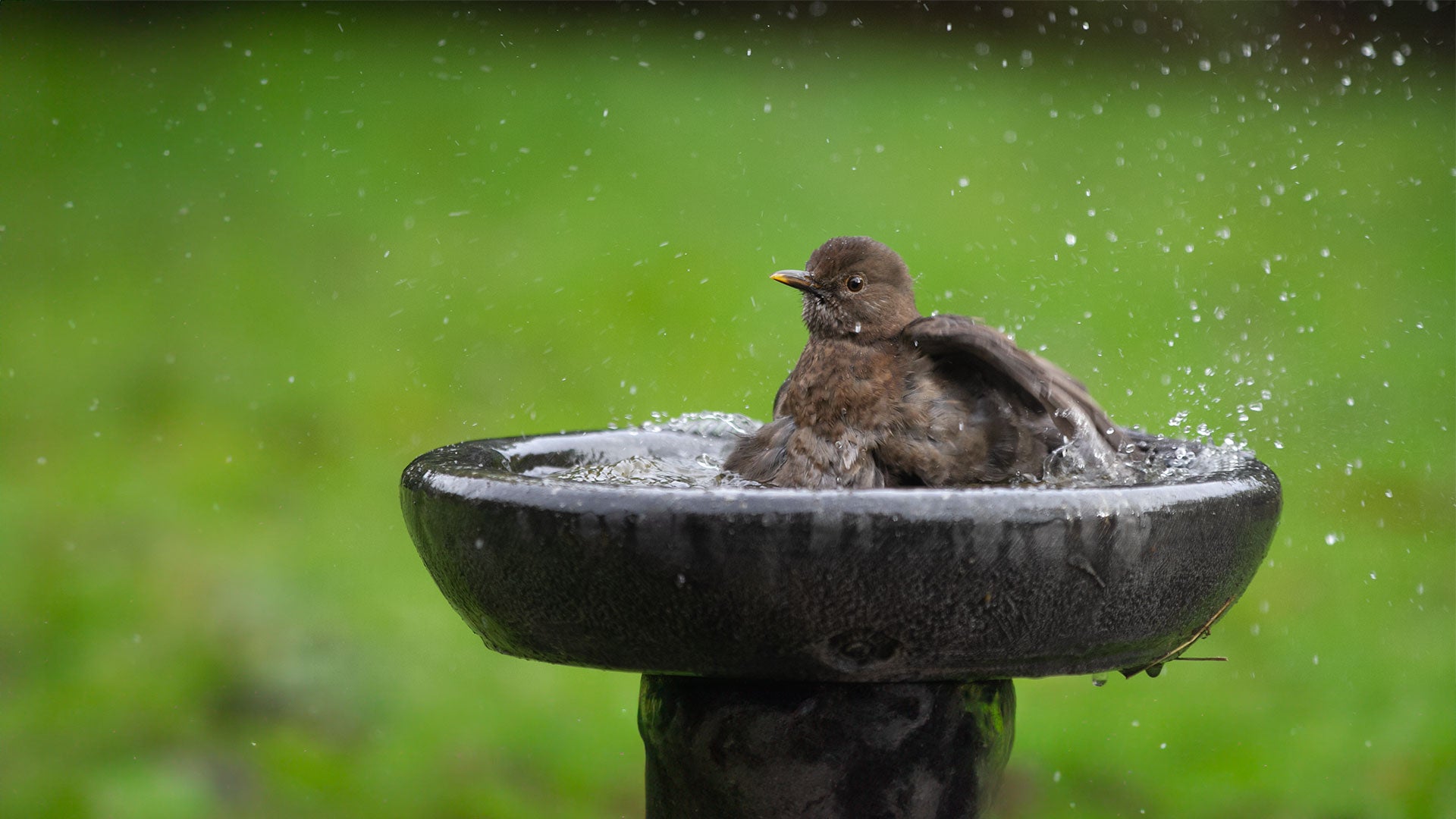
Providing a shallow bird bath with fresh, clean water is another useful way to support visiting birds throughout the colder months. Remember to check it regularly during freezing weather to ensure the water remains accessible.