I’m looking at my garden through the parched lens of a drought. What first appears to be a glorious summer garden reveals a different story: thirsty plants, hungry pollinators and wildlife searching for precious water. Yet nature is remarkably adaptable, and unexpected visitors are thriving too. This is a story about false autumn, changing weather and the small things we can do to help wildlife cope.
There is something unsettling about a garden in drought.
At first glance, mine looks glorious. Flowers are still opening, bees are still visiting, butterflies drift between the borders and the trees cast welcome pools of shade across the lawn. But look a little closer and the illusion begins to unravel.
The grass has turned straw-coloured. Leaves are curling at the edges, some already dropping despite the fact that autumn is still weeks away. The soil beneath my feet has become hard and dusty, cracking into little fissures where once it was soft enough to push a spade through.
It feels like autumn, but it isn't.
I think of it as false autumn, nature's response to stress rather than the changing of the seasons.

Trees shed leaves when they can no longer afford to lose water through them. Plants stop growing. Flowers fade early. Seeds form prematurely. The garden appears to be winding down, but this isn't the gentle preparation for winter I love so much, it is survival.
And it makes me look at the garden differently.
I notice a bumblebee lumbering between the flowers on a hot afternoon. It lands heavily, clinging to a flower head before disappearing beneath the petals. Bumblebees are remarkably well adapted to cool British weather, but extreme heat is another matter. When temperatures climb above 30°C, which we’ve witnessed frequently in recent years, they can struggle to fly, while drought adds another problem by reducing the nectar and pollen available to them.
The irony is that sunshine can make a garden look alive while quietly starving its pollinators.
A flower is not simply a splash of colour. It is a feeding station.
And when the plant becomes thirsty, the nectar supply can fall. Some flowers fade quickly or rush towards seed production. For a bee, butterfly or moth arriving hungry, a flower that looks perfect may offer a disappointing reward. Prolonged drought can therefore create a chain reaction: dry soil stresses the plant, stressed plants produce less nectar, fewer insects can feed, and the creatures that depend upon those insects lose food too.
This is particularly important for bumblebees. They aren't necessarily thriving simply because the weather is warm. Their colonies need a continuous supply of nectar for energy and pollen to feed developing young. Severe drought can reduce that supply at exactly the wrong moment, affecting the production of new queens that will carry the colony into the following year.

Suddenly the brown lawn doesn't seem quite so unimportant.
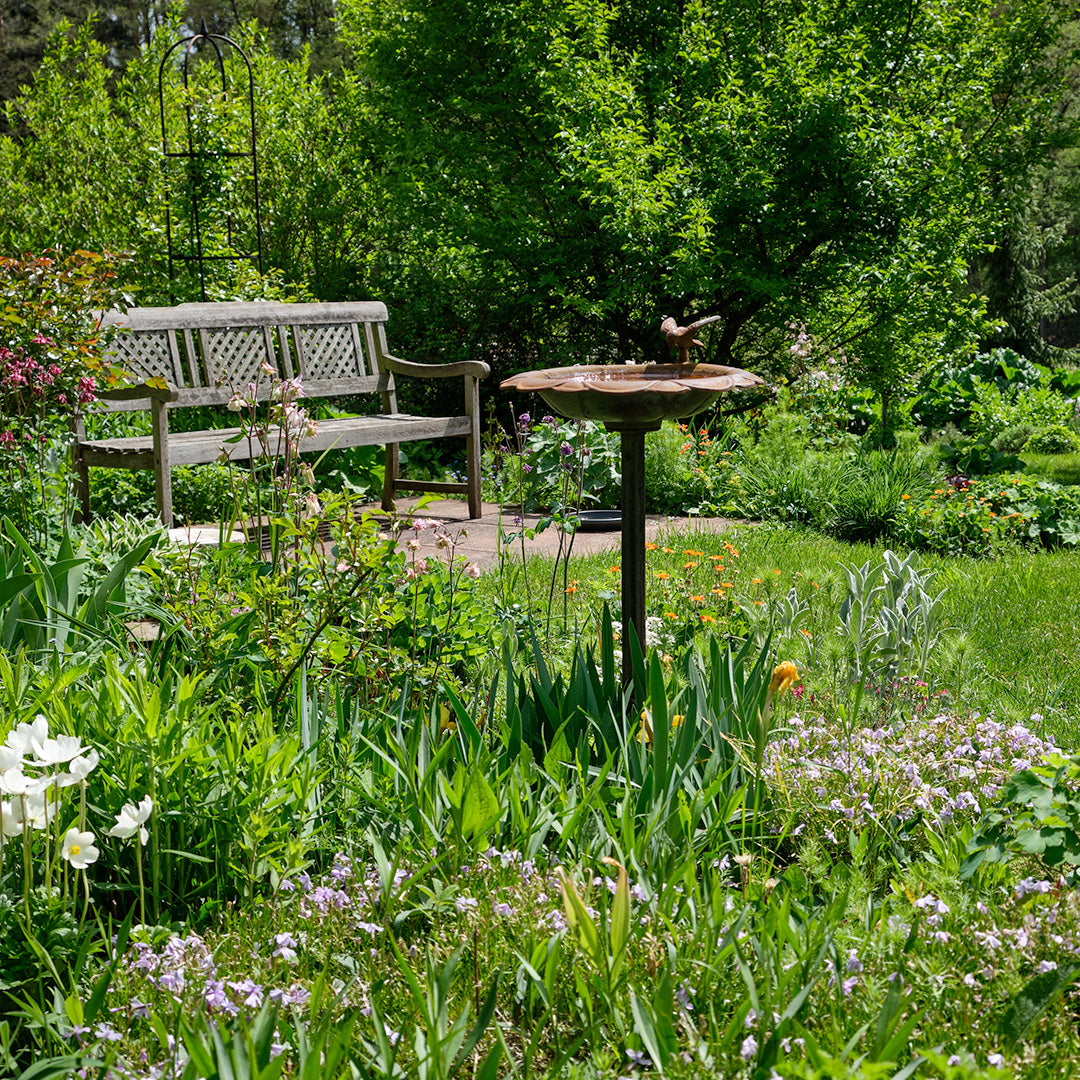
I have always loved the sight of a garden after rain, but during drought I begin to appreciate water almost as a wildlife habitat in its own right. A shallow dish can become a drinking station. A bird bath becomes a lifeline. A pond, however small, becomes an oasis.
And insects drink too.
Honey bees will drink water, particularly when the colony needs it for cooling and regulating the hive, but other insects have different ways of satisfying their need for moisture. Butterflies, for example, are often seen gathering on damp soil, mud or animal dung, sucking up water along with dissolved salts and minerals in a behaviour known as puddling. In prolonged drought, those moist patches can disappear altogether. A shallow dish of water with stones or pebbles rising above the surface can therefore provide a useful drinking point for honey bees and other wildlife. Leaving some naturally damp, shaded ground, leaf litter or muddy margins undisturbed gives butterflies and other insects somewhere to find the moisture and minerals they need.
I like the idea that something as small as a saucer of water can become a watering hole for a whole miniature community.
You don't need a pond either. A few centimetres of water in a shallow container, positioned somewhere shady, can make an enormous difference. Birds can drink and bathe, mammals can find a safe drink, while honey bees can collect water from the edge. Add a few stones or pebbles rising above the surface and there are safe landing places for the smallest visitors too.

But perhaps more important during a drought is the mud around the water. Mason bees need wet soil to build the little chambers in which their young develop, while house martins collect mouthfuls of mud to construct and repair their nests. When the ground becomes baked hard, that seemingly insignificant resource disappears. A shallow bowl of damp soil or mud, kept topped up beside the water, can provide surprisingly valuable building material. It may help a bee finish a nest, or a house martin repair one, keeping another generation on course.
A pond is better still, providing breeding habitat as well as drinking water for frogs, toads, newts and dragonflies. But even the smallest muddy puddle can become part of the answer. During drought, I think we sometimes concentrate too much on what wildlife needs to eat and forget that it also needs somewhere to drink, bathe, build and breed.
But drought brings a frustrating complication.

What if there is a hosepipe ban?
This is where helping wildlife becomes less about using more water and more about using the water we have intelligently.
I wouldn't waste precious mains water trying to make my lawn green. Grass is remarkably resilient and will usually recover when rain eventually returns. Instead, I'd concentrate any available water on plants that are flowering or about to flower, particularly those providing nectar for pollinators. Watering established plants selectively is far more useful than trying to keep everything looking lush.
Rainwater is precious too, so water butts become particularly valuable. Every shower that falls onto a roof can be captured and stored for later. When water is restricted, that little reservoir suddenly feels like a treasure chest.
And there is another thing I can do which costs absolutely nothing.
Leave the garden alone.
The temptation during hot weather is to tidy everything. Cut the grass. Clear the dying vegetation. Remove brown leaves. Prune away anything that looks stressed.
But that apparent mess provides shade and shelter.
Long grass keeps the soil cooler. Dense vegetation gives insects somewhere to escape the heat. Log piles and leaf litter hold moisture beneath them. Compost heaps become miniature humid ecosystems. Even a dying plant can provide refuge when the surrounding landscape is baking.
RHS advice during drought is remarkably consistent with this: leave overgrown plants, meadow grasses and dead stems in place, maintain shady areas, and avoid disturbing wildlife hiding from the heat.
Then, just when I think the drought has reduced the garden to survival mode, something extraordinary arrives.

A Humming-bird Hawk-moth.
It hovers in front of a flower, wings beating so rapidly they become almost invisible, its long proboscis probing deep into the bloom. For a moment I could be watching a tiny tropical bird rather than a moth that has flown here from the Mediterranean and North Africa.
These extraordinary migrants reach Britain every year, sometimes in remarkable numbers. They can appear almost anywhere in the UK between April and December, with numbers usually peaking during summer. Some are now breeding here, and a few may survive our increasingly mild winters.
It is one of the strange contradictions of our changing climate.
Some wildlife can exploit warmer conditions. The Humming-bird Hawk-moth is a spectacular example. But that doesn't mean a warmer, drier Britain is better for wildlife overall. Butterfly Conservation describes the species as a migrant and is particularly interested in whether migrants can successfully breed and survive our winters as conditions change.
For every apparent winner, there may be another species struggling.
That is why I don't want my garden to become an artificial oasis surrounded by a hostile landscape. I want it to be resilient. I want plants with deep roots and a tolerance for dry conditions, but I also want a succession of flowers so something is always available to the insects that depend upon them. I want trees and shrubs providing shade, organic matter holding moisture in the soil and water collected when the heavens finally open.
Most of all, I want to work with the climate rather than fight it. This is how I plan to keep my garden alive.

Sean McMenemy
Founder & Owner
Ark Wildlife