Today I’m exploring a word I’ve loved for years but never quite understood: petrichor, the earthy scent that rises when rain finally falls on dry ground. After an extraordinary spell of heat and drought, it seems the perfect moment to discover what creates that wonderful smell, what happens beneath our feet when the rain arrives.
Petrichor: The Smell of Rain and Why We Love It
There are smells that belong to particular places, and smells that belong to particular moments.
Freshly cut grass. Wood smoke drifting across a winter field. The sharp green scent of crushed nettles. Fallen leaves beginning to rot beneath the hedgerow.
And then there is petrichor.
That wonderful earthy smell that rises when rain finally falls onto dry ground.

After weeks of heat, dust and relentless sunshine, I've been waiting for it. The first proper rain feels like a physical event. I can hear it before I smell it, pattering against leaves and rattling through the trees. Dark circles splat on pale, parched soil. Then the scent arrives, slowly at first, and suddenly it is everywhere.
How to describe it? Earthy. Warm. Almost sweet. I step outside and breathe it in deeply.
It is one of those moments when I realise just how much information the natural world carries in scent. We tend to think of nature through our eyes, perhaps its colours and movement, or through birdsong and rustling leaves. But smell is there all the time, quietly telling us what’s happening.
And after a drought, the message is unmistakable.
Rain has returned.
I love that first smell so much that I'd never really questioned where it came from. “Petrichor”, I say it out loud. It sounds ancient, perhaps the name of some woodland sprite hiding beneath the soil and waiting for the clouds to return. The reality may not be magical but is, deeply spiritual.
The word itself was coined in 1964 by Australian researchers Isabel Bear and Richard Thomas. They were investigating the distinctive smell released from dry rocks and soil when rain arrived after a period of dryness.

They discovered that part of the scent comes from oils released by plants and absorbed into rocks and soil during dry periods. When rain hits the ground, these compounds are released back into the air. But there's another ingredient, a microscopic one, geosmin.
Produced naturally by soil-dwelling microorganisms, particularly a group of bacteria called Streptomyces, geosmin is responsible for much of that wonderful earthy smell we associate with damp soil. It is astonishing to think that the smell I experience when rain arrives is partly the scent of microscopic life waking up beneath my feet. And perhaps that explains why petrichor feels so alive. It is the living response from a garden that has been waiting.
The trees have been conserving water. Plants have closed their pores and slowed their growth. Insects have sought shade. Seeds have sat dormant. Soil organisms have retreated into the remaining pockets of moisture. Worms have retreated deep underground.
Then the rain comes and suddenly everything changes.
The hard-baked surface of the soil softens and begins to absorb water. Worms emerge. Slugs appear from hiding. Birds investigate the newly softened ground, turning over leaves and probing the soil for anything that has been brought to the surface.
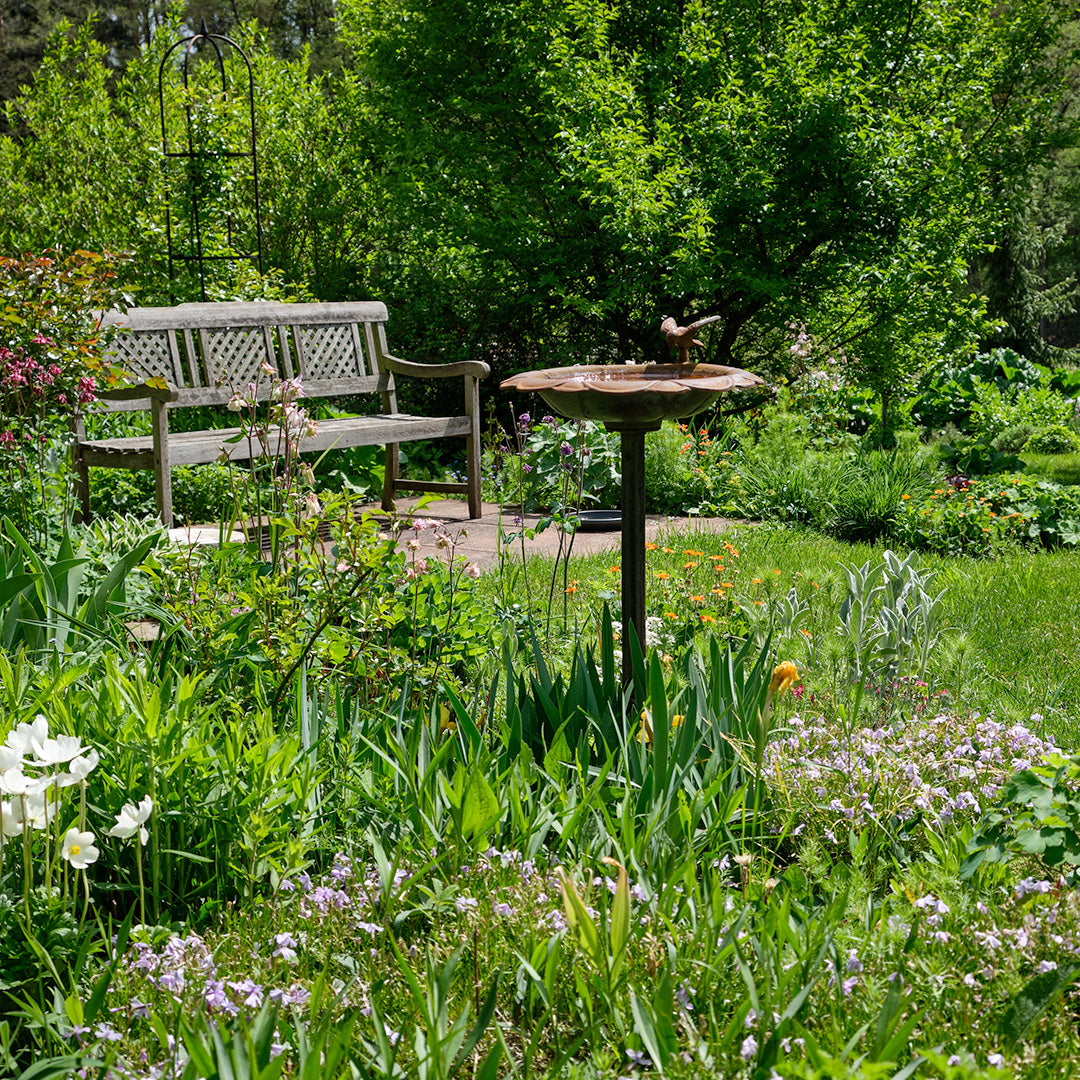
Even the smell changes as the earth drinks. I find myself standing in the garden immersed and hypnotised. Listening to the rain hitting oak leaves with water dripping, then heavy rain falling on baked ground. Plopping loudly as raindrops land in the pond. After weeks of heat, the sound is intoxicating.
But there is something else I notice. The garden doesn't simply become wet. It awakens. That may be why the first rain after drought feels so emotional. We aren't simply smelling water, we're witnessing the landscape begin to recover.
There is a catch, though. After a prolonged drought, rain isn't always as easily absorbed as we'd imagine.
Dry soil can become hard and compacted. Some soils develop water-repellent properties when it's been exceptionally dry, while vegetation may have lost much of its ability to slow rainfall and allow it to soak gradually into the ground.
So when the heavens finally open, water can run across the surface rather than sinking in. Suddenly the same rain we've been longing for can become a problem.
Flash flooding.

Overflowing drains. Streams rising rapidly. Water racing down roads and through gardens. Soil flushed away, insects beaten to the ground, rivers sweeping all before them. Racing down mountainsides and hills, flooding coastal towns and cities.
It's one of nature's little contradictions. After drought, we desperately want rain, but our landscapes may initially struggle to accept it. Rainwater harvesting helps. Water butts can capture some of that precious rainfall before it runs away. Mulching helps too, slowing the movement of water and helping the soil retain moisture once it has absorbed it.
And when rain is forecast after a prolonged dry spell, keeping drains, gullies and channels clear can help water move where it needs to go. In the garden, a little roughness can be useful too. Long grass slows water. Leaf litter protects soil. Plants break the force of falling rain. Roots create pathways into the ground.
A healthy soil packed with organic matter behaves rather differently from bare, compacted earth. Perhaps that's the real lesson hidden inside petrichor. Rain isn't simply something that falls from the sky. It is part of an abiotic interaction between the atmosphere, plants, soil and every living thing beneath our feet.

Still, I will rejoice under that first shower, putting aside thoughts of flood risk for a few minutes.
That unmistakable scent will rise from the earth, carried on cool damp air, and for a moment the whole garden will seem to sigh with relief. Within hours flowers will lift their heads and leaves will begin to unfurl. Worms will return to the surface and beneath my feet, billions of microscopic organisms will be getting on with the business of making soil alive again.
Petrichor.
A beautiful word for a beautiful moment.
The smell of rain.

Sean McMenemy
Founder & Owner
Ark Wildlife