Today I'm looking at the garden's forgotten spaces. A few years ago I replaced my stark concrete paths with woodchip from my own pruning. What happened next has been a lovely reminder that wildlife doesn't need grand gestures. Sometimes, the smallest changes bring the biggest surprises.
I don’t know about you, but my garden isn’t that big. Every inch counts.
For me, the big stuff, small stuff, hairy, feathered, spiky and even bitey things are welcome here. I want them all. So when I moved in my new home a few years ago and found a series of stark, desolate concrete paving-slab paths cutting through the garden, I knew something had to change.
They served a purpose, of course. They provided a firm surface to walk on, connected one part of the garden to another and kept my feet out of the mud. But they were hardly inspiring. Worse still, they were taking up valuable space without offering much in return.
So I ripped them up.

In their place, I laid woodchip from my own pruning. Nothing fancy, no expensive landscaping, just a generous layer of shredded branches and woody trimmings. It was soft underfoot, looked far more natural, and cost me nothing beyond a little effort. Better still, it put organic material back into the garden, rather than sending it away as waste.
I wasn’t creating a wildlife garden feature, I was simply building an attractive path. Or so I thought.
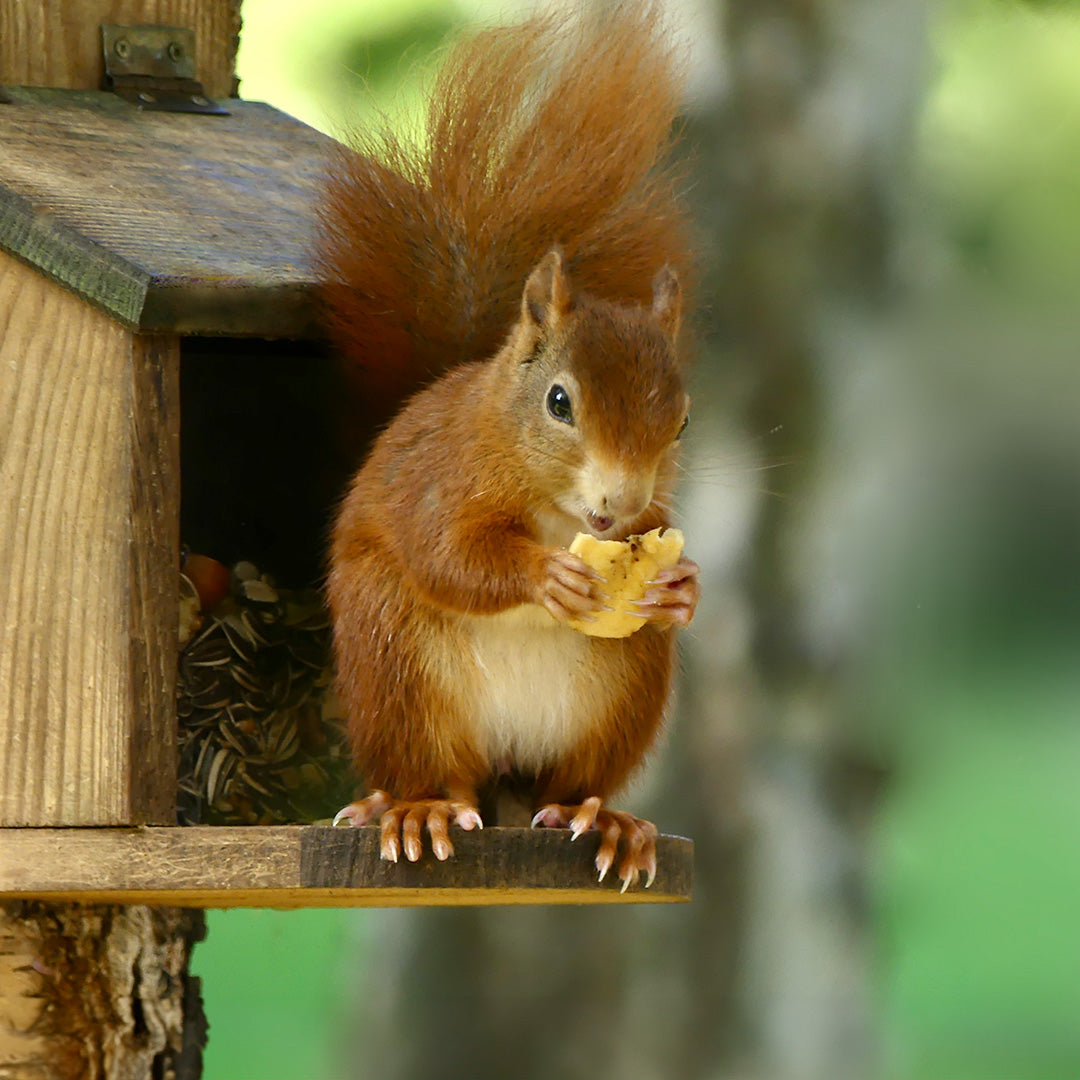
Over the following months, I began noticing just how busy this little strip of ground had become. Squirrels were forever burying and retrieving their treasures, pushing their noses into the chippings to cache nuts for another day. Blackbirds and robins scratched through the loose material, flicking fragments over their shoulders as they searched for worms and other invertebrates. Wrens and blue tits worked their way along the edges, investigating crevices and hunting for spiders.
Every so often, a beetle would scuttle across the surface, or a centipede would disappear beneath a piece of bark. Lift a handful of the older, damp material and there was a whole other world beneath it.

I began to realise that my path wasn't simply somewhere to walk. It was somewhere to live, hunt, hide and feed. And then came today's little surprise.
The woodchip has erupted in fungi.
Tiny caps, scattered in clusters, pushing through the woody litter as though the path has been quietly growing its own miniature forest. Some are so small I could have walked straight past them a few days ago. Others stand proudly above the surface, their delicate shapes catching my eye as I make my way along.
I stop and crouch down for a closer look. The air smells damp and earthy, and the chippings give slightly beneath my fingers. What was once a pile of discarded prunings has become something altogether more interesting.
Of course, the fungi haven't appeared overnight in the way it might seem. Beneath the surface, a network of fungal threads called mycelium has been breaking down the woody material, gradually turning it into something other organisms can use. Fungi are nature's recyclers, working alongside bacteria and a host of invertebrates to return nutrients to the soil.

Much of that work is invisible. We see the mushrooms and toadstools when conditions suit them, but the living network beneath can have been developing for months or years. And that's what really delights me most. The path hasn't suddenly come alive. It has been alive all along. I've simply been given a glimpse of what's happening beneath my feet.
As the wood breaks down, the habitat changes. Moisture is held within the older material, decomposers find food and shelter, and the invertebrates attracted to this little patch of ground become food for the birds and other creatures that visit. It's not a neat, simple chain, but a web of relationships, each part contributing something to the whole.
The concrete I removed offered very little of this. It had its practical use, but it sealed off the soil below and offered little to the life above. My woodchip path, by contrast, is changing all the time. It softens, settles, decomposes and feeds the ground beneath it. Eventually, it will need topping up, and I'll have another opportunity to put my garden prunings to good use.
We tend to think in terms of features. A pond for frogs. A nest box for birds. A wildflower patch for bees. A hedgehog house tucked into a quiet corner. All worthwhile, certainly, but what about the spaces between them?
The path. The fence line. The ground beneath a shrub. That awkward strip beside the shed where nothing much seems to happen. What if these aren't empty spaces at all, but opportunities waiting to be discovered?
A concrete path might suit a busy entrance or a route that needs a firm, accessible surface. But elsewhere, perhaps a permeable path of woodchip, gravel or stepping stones would work just as well. A patch of bare earth might become a dust-bathing place for sparrows, while a small pile of leaves beneath a hedge could provide shelter for invertebrates. Even a modest collection of logs can become a refuge for fungi and the creatures that depend on decaying wood.

My path still gets me from A to B. I can walk along it, carry my gardening tools and reach the compost bin without sinking into the mud. But it also feeds the soil, shelters tiny creatures and brings birds within arm's reach. Today, it has given me the unexpected pleasure of discovering a miniature fungal landscape right outside my door.
I may not have the biggest garden, but standing here looking at these tiny fungi, I’m reminded that a little space can hold an extraordinary amount of life.

Sean McMenemy
Founder & Owner
Ark Wildlife